AIGames -sdgoal 1 who's done most to end poverty with finance? - eg financial literacy curriculum....digital finance most populous bank designed by pro-poor foundation partners ...; tech is best chance to end poverty but where's AI Banking and eg green finance

Saturday, March 7, 2020

seems like lot of good stuff- dad did lot of volunteer work eg on their judging panel for economic prizes and writing the hundredth hobart leaflet- this reviewed the first 100 hobarts and how paper currency was the most common crisis 

brexit would never have happened with subprime 2008 - the whole of europe is run for big bureaucrats and germany's reunification - viruses and wars know no borders when people in brussels behave like king canute- we invite people from every european country to come up with ideas on win-wins with another european country www.economisteurope.com and look forward to fringe festival of adam smith debates on free trade between communities everywhere during cop26 glasgow nov 2020

chris.macrae@yahoo.co.uk
----- Forwarded message -----
From: Institute of Economic Affairs <iea@iea.org.uk>
To: "chris.macrae@yahoo.co.uk" <chris.macrae@yahoo.co.uk>
Sent: Wednesday, 4 March 2020, 11:35:49 GMT-5
Subject: ICYMI: Fowl play

March 2020
Facebook   Twitter
ICYMI: The IEA Newsletter!

  • Fowl play
  • Adam's curious task
  • Intern opportunities
  • Calling all teachers
  • What's in a name?
  • You’re invited!

Fowl play

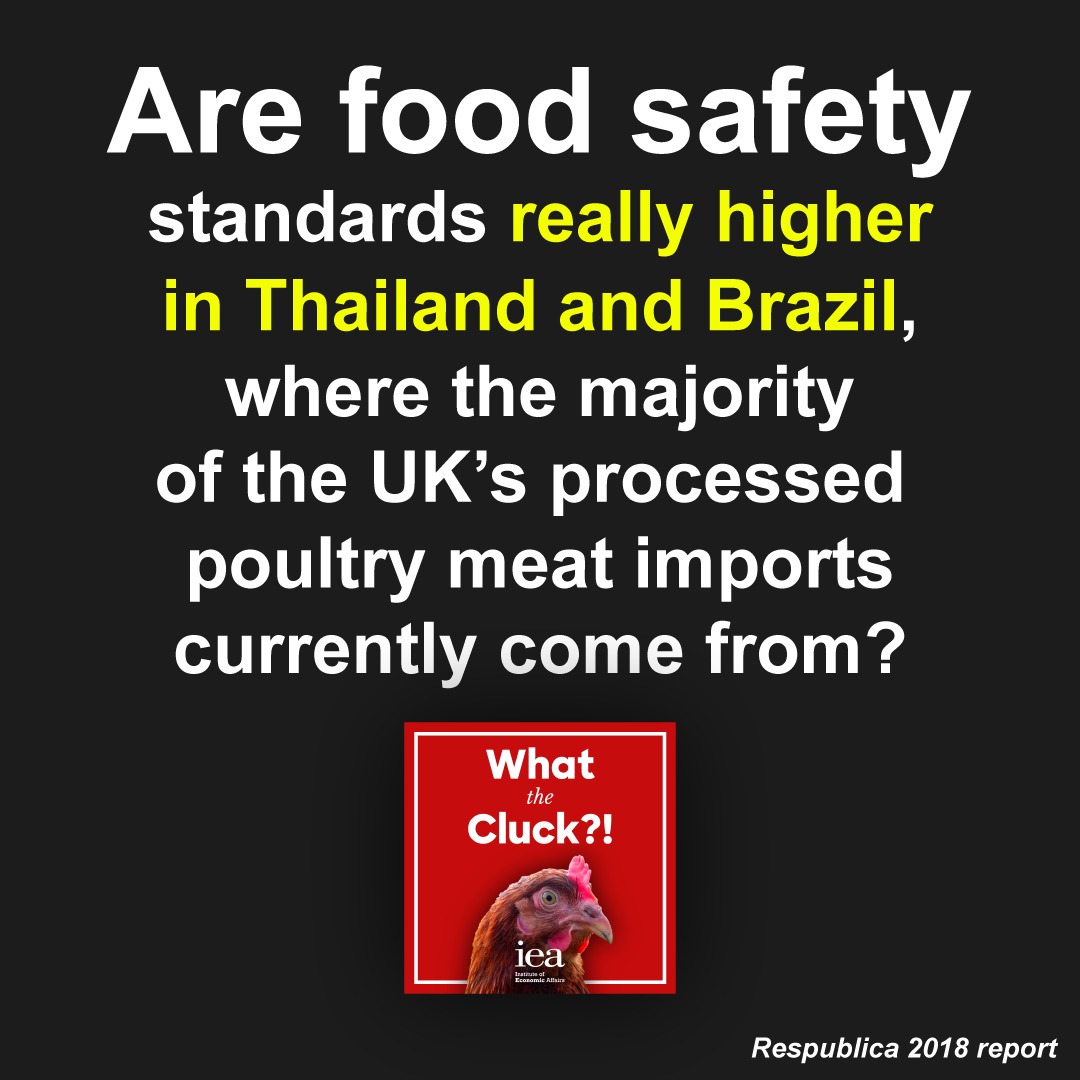
Chlorinated chicken has become totemic once again in all things Brexit, since most British consumers associate chlorine with domestic bleach.

But are the arguments put forward by certain groups to keep US meat out of the UK market thinly veiled protectionism? Or are they simply addressing justifiable concerns on food standards and safety?

On this week’s IEA podcast, host and Digital Manager Darren Grimes discusses the topic with the IEA’s Head of Regulatory Affairs, Victoria Hewson.
You can subscribe to our podcasts on Apple PodcastsSpotify and Podbean.

Curious task

Elsewhere, the Canadian Liberal Institute interviewed Director of EPICENTER, Adam Bartha, on the rising tide of populism in Europe and the ongoing political realignment on their weekly podcast the "Curious Task".

Adam spoke about the rise of authoritarian ideas on the European political spectrum and the dangers they pose for liberal democracies. 
Left- and right-wing populists across Europe are united in their stance against free trade, open societies, and the rule of law. 


He outlined how free market liberals should address new policy areas and reach out to new allies in order to further their cause of open, global societies.
Listen to the full episode here.

Intern opportunities

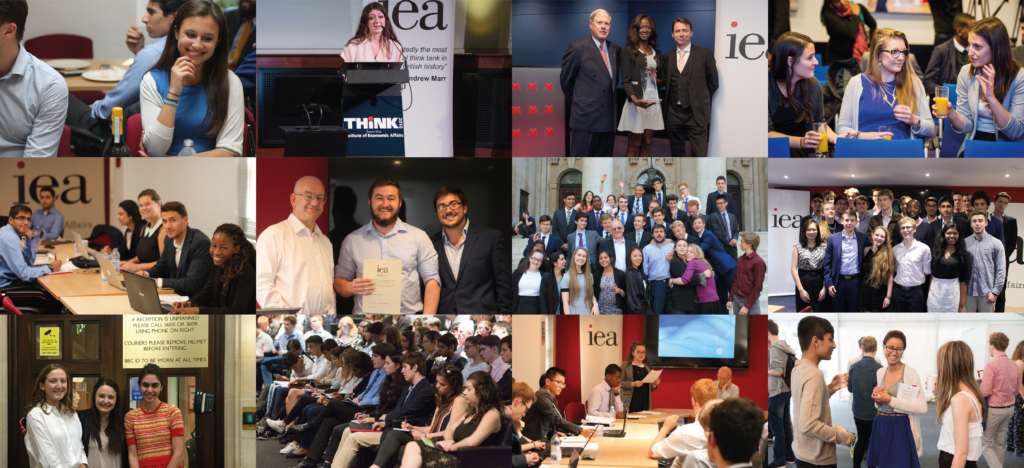
Know anyone who'd like to take part in the IEA's acclaimed internship programmes?

We have a wide range of programmes - from week-long internships for Sixth Formers to longer-term general internships. 

All our internships will introduce you to free market ideas and expand your knowledge of free markets and free society.


But don’t take our word for it. Here’s just one of the many testimonials we’ve received from former interns:
“Joining the internship scheme at the IEA was a truly rewarding experience and I would recommend it to anyone with an interest in economics and freedom. I learned valuable skills in logistics, events planning and team management, whilst being academically stimulated through discussions, seminars and lectures with other interns and staff.”

Click here to learn how to apply for an internship, and be sure to pass on the details to anyone you know who might be interested.
Cover

Calling all teachers

How best to measure an economy’s success?
Later this month, the IEA is hosting an event for teachers, examining the ways we can measure economic success - including by GDP, growth, productivity and inequality.

Aimed at teachers of economics and related topics at A-Level/IB/Scottish Higher, the events will include talks from IEA Economics Fellow Julian Jessop and our Head of Education Dr Stephen Davies.

The event will take place on 10th 
March, from 9.45am - 2.30pm at the University of Buckingham.

Register here.
If you’d like to reserve a place, follow the links above or email Ralph Buckle at events@iea.org.uk. Please also include the name of your school.
Read more
Cover

What's in a name?

Libertarian illusion... 


Socialists are fond of modifiers these days. We've had "democratic socialism", “millennial socialism” and libertarian communism to name but a few.
But as the IEA's Head of Political Economy Dr Kristian Niemietz argues on our blog this week, these distinctions are "wholly illusory" - and socialism will always be authoritarian in its actual practice.

Eco-independence... 


The EU has influenced the UK’s environmental policy agenda in a number of ways. Simply retaining what has been inherited from the EU would prove ineffectual for the UK in developing a cost-effective approach to tackling climate change.
Writing for our blogIEA Research Assistant Luke Warren argues that unshackled from the EU, the UK can formulate a coherent environmental programme.

Make trade woke again..?


The inherent neutrality of trade has recently come under fire. The WTO has said that trade should be "postively gender biased" and in the UK, the Women's Budget Group has called for more gender sensitivity in trade policy.

But, as Maria Chaplia argues on our blog this week, trade is a great tool for empowerment, precisely because of its impartiality.

Read more of our blog here

Read more
Cover

You're invited!

In conversation with John Humphrys 

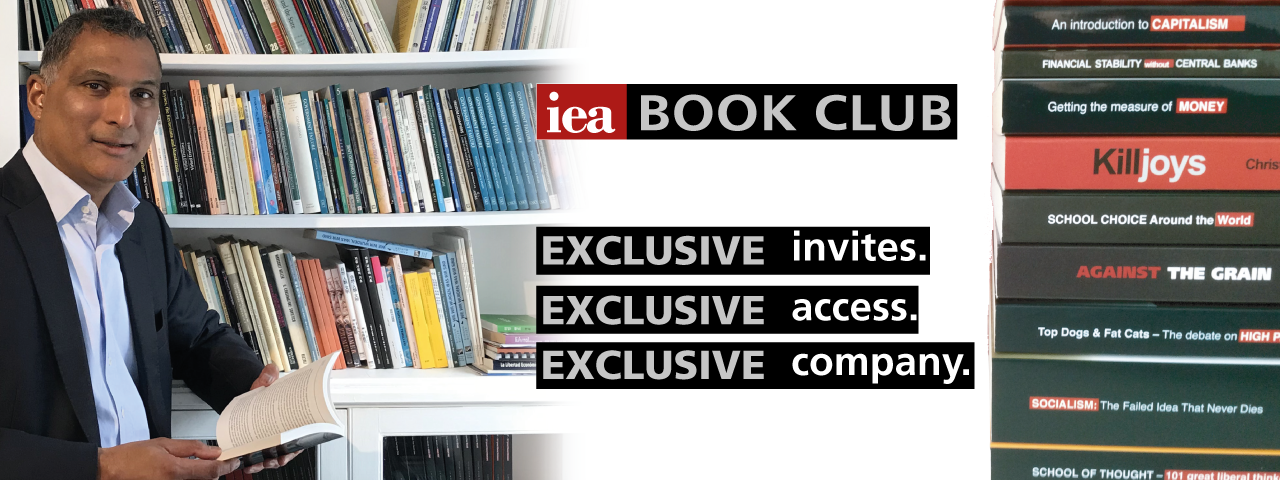
Former BBC veteran John Humphrys will be our special guest for a forthcoming IEA Book Club event.


John – who hosted Radio 4’s Today programme from 1987 until last year – will join us to discuss his fascinating memoir, A Day Like Today, in which he looks back at his remarkable career, reflects on the politicians he interrogated and weighs in on the role of the BBC.

The event will take place from 6 to 8pm on Monday, 9th March here at the IEA and places are sure to be in much demand. If you would like to attend please email bookclub@iea.org.uk
You can also find out all about the IEA Book Club – which brings you year-round invites to exclusive events with top authors here.

New Vision? The Future of the BBC

The IEA is delighted to host a panel discussion on ‘New Vision? The Future of the BBC’


The UK Government has launched a public consultation on whether non-payment of the TV licence fee should remain a criminal offence. This marks a significant opportunity for the BBC, and its funding model, to change. But should we go further? 

The IEA recently published ‘New Vision: Liberating the BBC from the licence fee’ which sets out a proposal for a subscriber-owned mutual, along the lines of the National Trust, so could that idea gain momentum.


Join us and our panel on 16th March, 6-8pm for a lively discussion about the potential routes the BBC may embark upon, including that proposed in New Vision’.

Register above to ensure your spot, or alternatively email events@iea.org.uk.
Read more

Monday, December 31, 2018

2018 top 12 ingredients of trillion times moore tech

some digital sources ; Germany's AHT    Singapore   Davos   S&P  MIT Stanford

AI one day there will be too much data mapping in any operating system humans used to govern, SO AI will be the real time mediator  (questions what to prioritise  : eg over last 20 years why wasn't ai pandemic tracking priority over ai autonomous cars?;; whats the risk that initially incomplete inclusion of data will multiply inequality or make a race-fatal mistake) - see also futureoflife.org&

Satellite GPS - old worlds may have used lat and long- but now satellites GPS anywhere on the planet; smart tools beaming up data may be called :-

IOT: internet of things - from your personal mobile, to myriads of sensors you may wear to track your body's vitals,  to a smart city camera, to a robot gardener

DRONE: typically an IOT with wings with camera and in military contexts with gunpower, conversely humanly integral to monitoring nature from climate metrics to smart agriculture ..

Virtual Reality: Usually something you wear over your eyes often to play a game or to be (in some other experience than your physical one but potentially able to play with any human sense ; in parallel artificial intel is getting ever smarter at every human sense both to communicate (customise services) and to analyse 

3d printing: things once sculptured or utilizing machine tools that chizzled out a solid artefact can now be built up in 3d by digital process

5G so far every decade has seen an exponential leap in amount of data connecting positions around the world; not everywhere has equal access to apps and data algorithms; 

Blockchain-leaped into global concerns from 2008 (see paper by Satoshi); could blockchains provide best of both worlds: total privacy and total data modeling; could digital cash do a better job than paper cash and if so who's win and lose from such a transformation

Cloud : The times when computers stored all the data they needed are long gone: now they analyse data residing in clouds

Quantum the fastest number crunching computers in the world dont just use more memory power but quantum's new design


Friday, November 30, 2018

iot

 Healthcare IoT

Next in Tech

    • Technology

The last year drove a dramatic influx of technology into healthcare, but that surge was already well underway. Brian O’Rourke, senior research analyst, joins host Eric Hanselman to talk about the impact of the Internet of Things in healthcare and how organizations are dealing with the volumes of data that they’re creating. Technology management challenges are being replaced by those around data management. There are echoes from our data privacy episode and a reference back to the Egyptians.


Commercial Transportation and IoT

Next in Tech

    • Technology

While Tesla’s may grab the headlines, commercial transportation has a considerable impact on markets and their supply chains and IoT technologies could improve their performance. Research analyst Mark Fontecchio joins host Eric Hanselman to look at what’s underway now and where it’s headed. The technology is ready, but the hard part is getting it integrated into the myriad providers across the transportation industry. No electric trucks soon, but IoT deployments are getting in gear.


IoT’s Role in Energy and Utilities

Next in Tech

    • Technology

The increasing use of renewable energy sources is transforming the planet and cutting emissions, but they’re complicating the operation of energy grids. IoT’s capabilities and appropriate analytics can help adapt the grid to make better use of these options and senior research analyst Johan Vermij joins host Eric Hanselman to talk about where they come into play and how they’re being put to work. They’re part of ensuring that the benefits of these improvements are being distributed equitably.

Wednesday, October 31, 2018

5+g digital infrastructure (tech coastal belt) supercity

 Next Generation Infrastructure

Next in Tech

    • Technology

We’re living in an age of next-gen everything and tech infrastructure seems like it’s always in flux. Liam Rogers, research analyst in 451’s infrastructure team, joins host Eric Hanselman to open up what’s really changing and their impacts, take us back to the Planet of the Apps and generally work at making sense of these ideas. They look at the concept of observability and how it can manage the scale of cloud native operations and microservices architectures, even coping with ESG requirements.

Datacenter and Infrastructure Markets in China

Next in Tech

    • Technology

Every region on the globe has their own characteristics, but the high levels of digitization in China create interesting requirements. Perkins Liu, senior research analyst, joins host Eric Hanselman to explore the dynamics of the market and the forces at work. High levels of mobile phone use and the accompanying dominance of mobile payments are driving datacenter expansion. China also has proactive requirements for power optimization and green grid utilization to manage environmental impacts.

Sunday, September 30, 2018

pieces of greentech

 related jigsaw pieces of era of trillion times "moore" tech

The many facets of ESG in technology

Next in Tech

    • Technology

While the impacts of ESG are becoming much more visible, the nuances in technology can be harder to discern. Chris Marsh, principal research analyst, joins host Eric Hanselman to explore some upcoming research that looks at ESG aspects in enterprise technology. It goes beyond energy or carbon footprint, extending to working environments, data management and customer experience. This is a conversation that has to expand to putting technology to work improving business practices and more.


Batteries in Tech

Next in Tech

    • Technology

Backup is the main job for batteries in most large technology implementations, but that’s changing. Kelly Morgan, research director for datacenters, joins host Eric Hanselman to explore ESG and regulatory changes and how recycled electric vehicle (EV) batteries are getting a second life as supplemental supplies that can shave off demand peaks. The shift in chemistry has both opportunities and challenges. This is a follow-up to the S&P Global Battery Trends webinar and covers key points.

Friday, August 31, 2018

ai

 AI/ML maturity and pandemic effects

Next in Tech

    • Technology

The last year has seen a maturing of the use of Artificial Intelligence and Machine Learning (AI/ML). It’s also been whipsawed by the pandemic. Peter Licursi, product manager for the Natural Language Processing team with Kensho and Nick Patience, a 451 Research founder and research director for the AI Applications and Platforms practice, join host Eric Hanselman to discuss how AI/ML use is changing. There’s more cloud and less need for data scientists, it turns out, for those doing it right.